In the early stages of a self-build project, it’s almost inevitable that you’ll be tuning into a few episodes of Grand Designs for inspiration – or maybe you’ve decided to take on your own project after watching the show. Either way, you’re bound to have found yourself awestruck by the incredible architectural structures featured on screen.
There’s always a moment towards the end of the episode where they reveal the finished project. After years of mud, tears, steel and mounting pressure, everything is framed with splashes of golden sunshine ricocheting off sleek beams or pouring through an entire wall of glass.
You’re toured around the house. The imported marble worktops. The expansive open-plan kitchen-living space. The secret power outlets. The impressive floor to ceiling apex glazing that fills one entire wall and lets light flood through into the bedroom.
The architecture feels lavish and luxurious, yet somehow the interior always feels a bit off key, and as though it’s been thrown together at the end with whatever money is left over.
Not only that, you discover the oversights in the planning process that cost thousands in corrective measures. Services that had to be rerouted. Layouts that were reworked once the realities of daily life began to surface. Lack of window treatments that don’t enable you to block out the light in the morning. Storage that hadn’t been fully considered until it was too late, leaving it squeezed in at the last minute and never quite as effective as it should have been.
Very often, in all the ambition and desire to create something extraordinary, the grand design can lack the everyday practicality and comforts that makes a house truly liveable.
And this isn’t just a problem with televised builds. It happens in real projects when interior design is treated as something that comes later in the process, as opposed to something that should be integrated early.
Interior design isn’t just about picking out cushions and curtains. It isn’t a decorative layer added once the structure is complete. It’s what determines whether a large architectural project works in practice, and it makes the difference between a home that photographs beautifully on reveal day, and one that feels effortless to live in for years afterwards.

The common mistake: Falling in love with the structure first
When you begin planning a self-build or major renovation, the focus quite naturally centres on planning permissions, structural drawings, glazing, rooflines and steel. The shell of the building feels decisive. It’s visible progress, so it feels like momentum.
Interiors can seem like something to refine once the space exists. But by the time walls are up and services are in, many of the most important decisions have already been locked in.
We often speak to clients who say, “We didn’t realise we needed to think about that yet.”
A kitchen may be beautifully proportioned, yet lack sufficient space for integrated recycling and everyday appliances. A utility room might technically be included, but without carefully planned storage it quickly becomes cluttered. A bedroom can look serene in photographs, but lighting positioned without thinking about dressing or make-up application can cast harsh shadows every morning which lead to you feeling off your game for the rest of the day.
Plug sockets get installed before furniture layouts are finalised. A television is centred perfectly on a wall, only to discover the aerial point sits elsewhere. The options then become visible trunking across freshly plastered walls, or additional labour to reroute cables, replaster and repaint.
None of these issues are dramatic in isolation. But they accumulate and create friction throughout the project. They interrupt flow and serve as daily reminders that something wasn’t fully resolved.
Why interior design should start at planning stage
It can’t be stressed enough that timing is everything.
We receive so many enquiries after building work is already underway, and while we can still support and refine plans, there are always moments where we have to say, “If we’d been involved earlier, this could have been resolved differently.”
Interior design for self-build and renovation projects shapes how the home will be experienced every single day.
Lighting is not simply about selecting fittings. It’s about how a space feels when you wake up and how it eases you into the day. How it transitions from a busy family breakfast to hosting a relaxed evening with friends. Whether layered circuits build atmosphere as well as functionality. Those decisions influence wiring plans and switching layouts which need to be thought about before ceilings are closed.
Storage is not simply about cupboards. It’s about whether surfaces stay calm or become chaotic. Whether coats, school bags, toys and appliances have somewhere to land. When considered early, storage disappears into the architecture. When left late, it competes against it.
Smart home systems, heating zones, automated blinds and integrated audio require coordination before services are fixed. Bespoke joinery – kitchens, media units, dressing rooms – need to be measured and detailed alongside structural plans, not retrofitted once rooms are defined.
When architects and interior designers collaborate from the outset, how you live is designed alongside how the building stands.
The impact is not always visible in photographs, but it is always felt in ease.

Budgeting for success: Protecting the feeling you started with
There’s also an emotional reality to self-build projects. You begin with a vision. A feeling. A sense of what this new home will represent for your family.
As the build progresses, so much investment, both financial and emotional, goes into creating something architecturally bold that, by the time interiors are considered properly, budgets can feel tighter than expected.
It’s completely understandable. The structure feels permanent and urgent, so the interior details can appear like lesser decisions. But those details are what make a home feel finished rather than simply functional.
Layered lighting rather than a single central pendant. Bespoke joinery rather than freestanding storage that never quite fits. Materials selected not only for impact on day one, but for how they age, adapt and support everyday use.
When interior design is budgeted for from the beginning, decisions feel deliberate rather than reactive. There’s room to protect the integrity of the original vision instead of scaling back at the final hurdle because of overspending and budget mismanagement in the early planning.
It’s not about increasing spending. It’s about maximising your budget so that you can ensure that you get to experience that feeling you imagined at the start when you pictured yourself finally walking through the door of your dream home and exhaling, knowing this is a space that is designed to help you thrive.



A real-life example: Period property extension
Our Period Property Extension project is a strong example of what early collaboration makes possible.
The clients owned multiple hospitality businesses and worked overseas frequently. Their time was limited, and they needed a team who could work closely with their architect and builder to carry the detail and reduce stress.
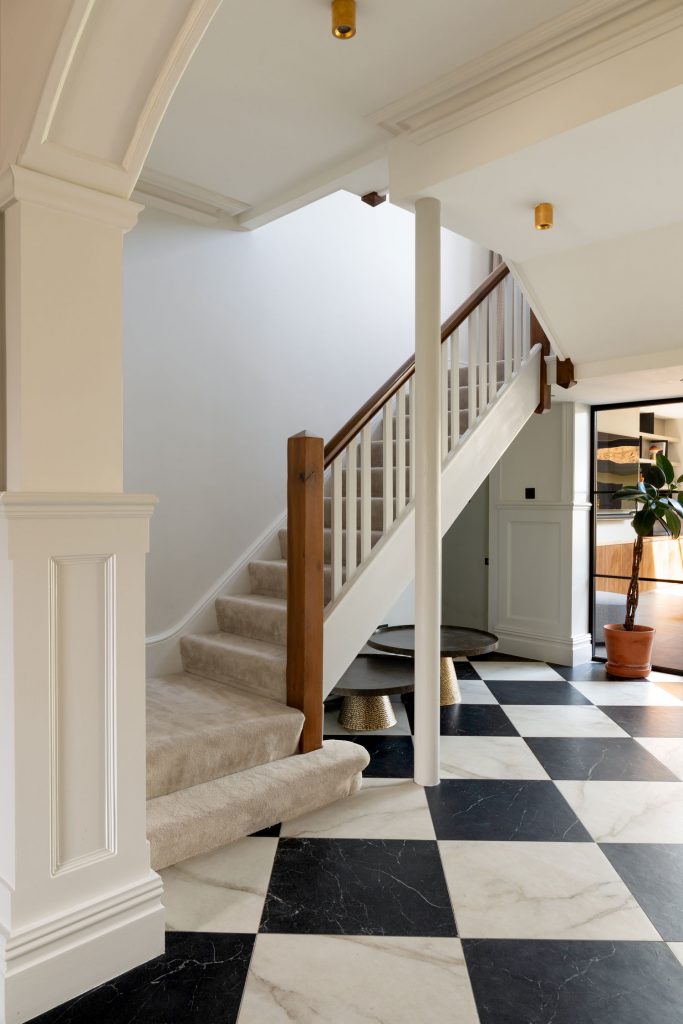
The property itself was a beautiful period home, but it felt tired and underused. The kitchen was small and restrictive. The hallway closed off light and movement. The upper floors were filled with rooms that no longer suited the way the family lived.
Architectural plans had already been drawn up for an extension and attic conversion, but before construction began, the clients asked us to review the layouts and develop the interior design alongside those plans.
That timing changed everything.
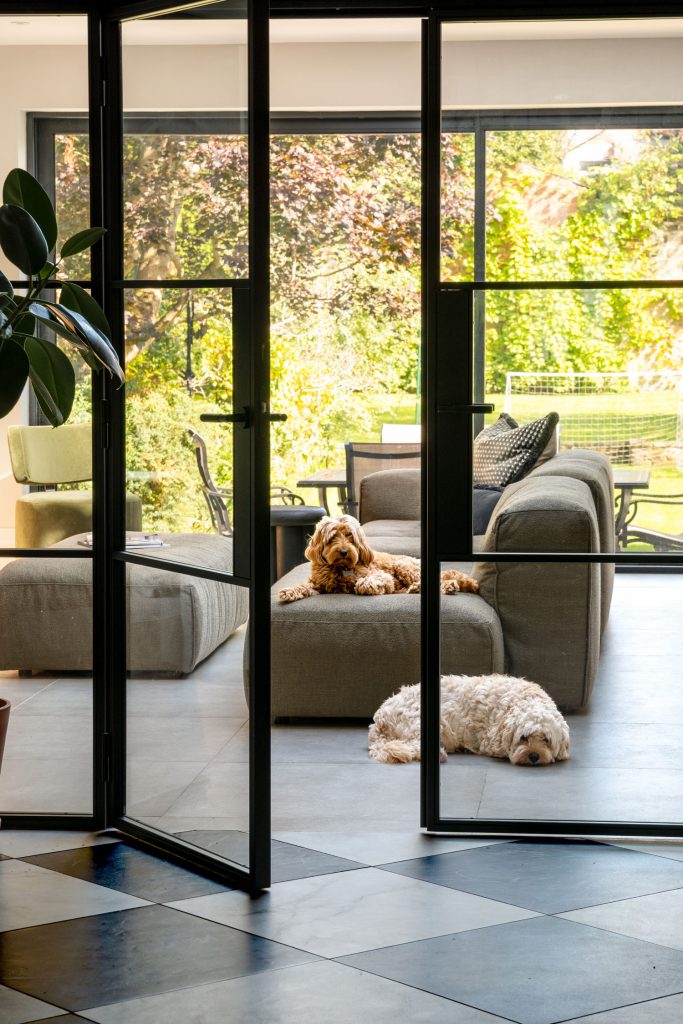
We were able to refine the extension so it became the true hub of the home – a space designed for family life and entertaining. Lighting and electrics were positioned in direct response to furniture layouts rather than guessed in advance. Flooring was considered in relation to the patio to strengthen the indoor–outdoor connection.
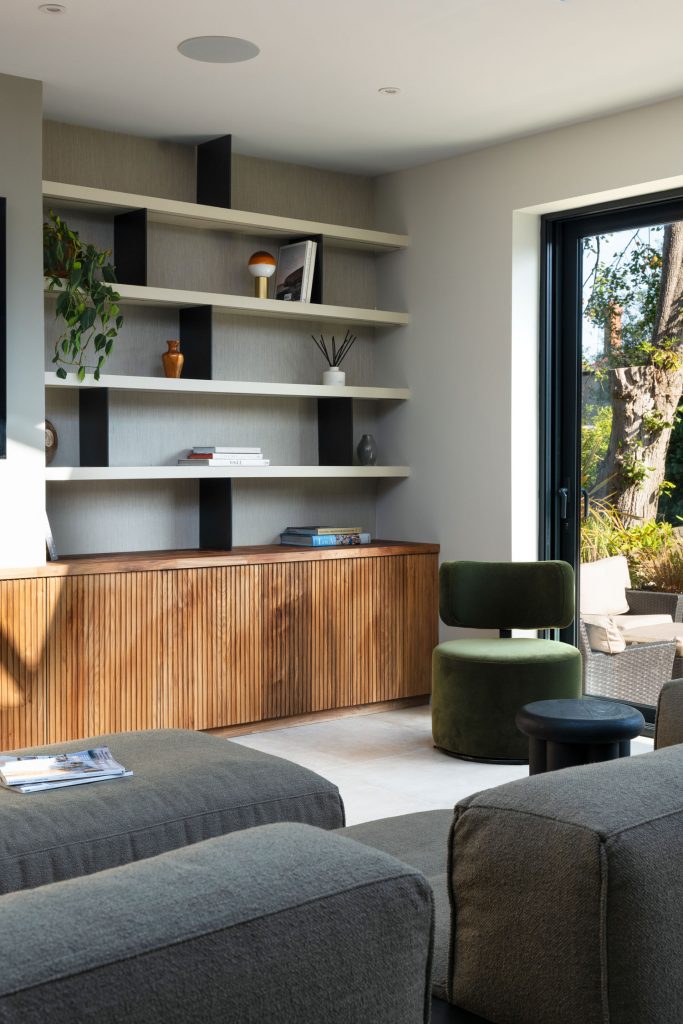
Bespoke bookcases with an integrated drinks cabinet were introduced in the front lounge, grounding the space in personality. Alcove storage was designed specifically for children’s toys so that daily life could unfold without visual clutter. A bespoke media unit broke up a large expanse of wall in the open-plan space, balancing styling with practical storage.
The kitchen itself was carefully detailed, including a custom floating-look dining table intersecting with the island – a direct response to the clients’ love of cooking, wine and hosting.
Upstairs, the loft was transformed into a contemporary suite with bespoke wardrobes tucked into the eaves to maximise storage without compromising flow.
Because these decisions were made before walls were closed and services fixed in place, nothing feels added on. Nothing feels compromised.
The home now blends period detailing with contemporary living in a way that feels cohesive rather than layered. It supports family life, entertaining and everyday movement without demanding constant adjustment from the people living there.
That cohesion was not accidental. It was built into the design from the beginning.
Planning your own self-build or renovation?
A self-build or major renovation often carries a powerful emotional high when the scaffolding comes down and the architecture stands complete.
But long after the reveal moment has passed, everyday life remains.
When interior design is embedded from the outset, those everyday moments feel considered. Storage works. Lighting responds. Layouts support rather than restrict.
If you’re planning a self-build, extension or significant renovation, our Home Renovation Guide outlines the key interior design considerations you need to make at each stage of your project, helping you avoid costly oversights and protect the vision you started with.