What Telfit Farm House Gets Right – And How to Bring That Feeling Home
My first 10 seconds at Telfit Farm; you notice it before you’ve unpacked. The door closes behind you and the air is different – fresher, stiller, carrying something faintly mineral from the stone walls. There’s no background hum of traffic. Just the wind on the moor and, somewhere beyond the house, water moving over rocks.
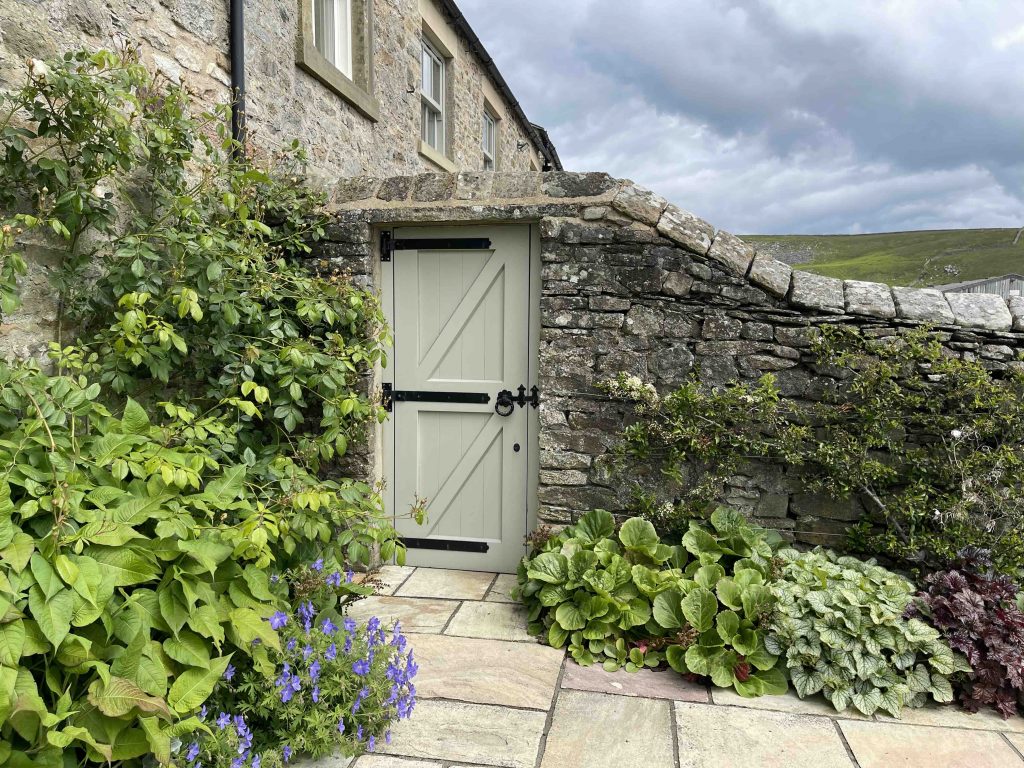
Telfit Farm is a restored 19th-century Georgian farmhouse in a glacial bowl in Swaledale. My partner Clark runs small group wellness retreats across the UK , and I joined one there earlier this year. It’s 650 acres of moorland in the Yorkshire Dales; the kind of place where your phone loses signal and your shoulders drop before anyone’s told you to relax.
I went as a guest. But within half an hour I was running my hand along door frames and crouching to look at skirting details, because whoever restored this farmhouse understood something that most renovations miss. They hadn’t just made a beautiful house. They’d made a house that changes how you feel the moment you step inside it.
The Leathams, who bought Telfit in 2016, restored it so well it ended up on the cover of Living in Country Style. But what interested me wasn’t the photography. It was what the photographs can’t capture, the atmosphere of the rooms, the texture of the surfaces, the way the whole place seems to slow your breathing down without you noticing.
Surfaces You Can Feel
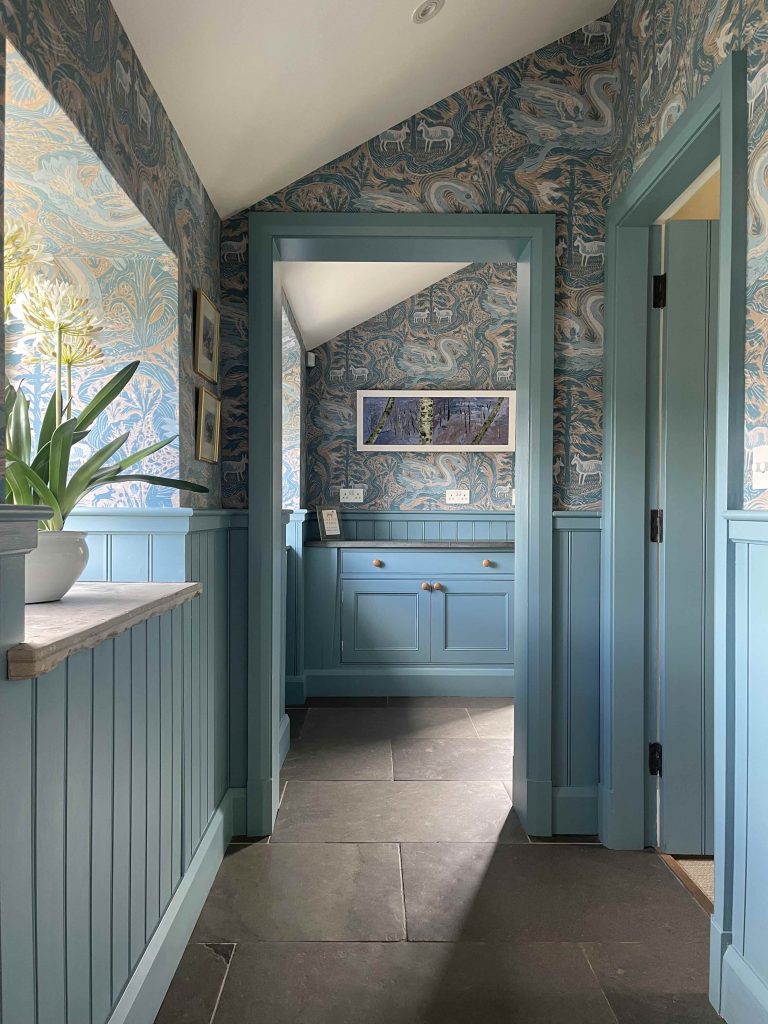
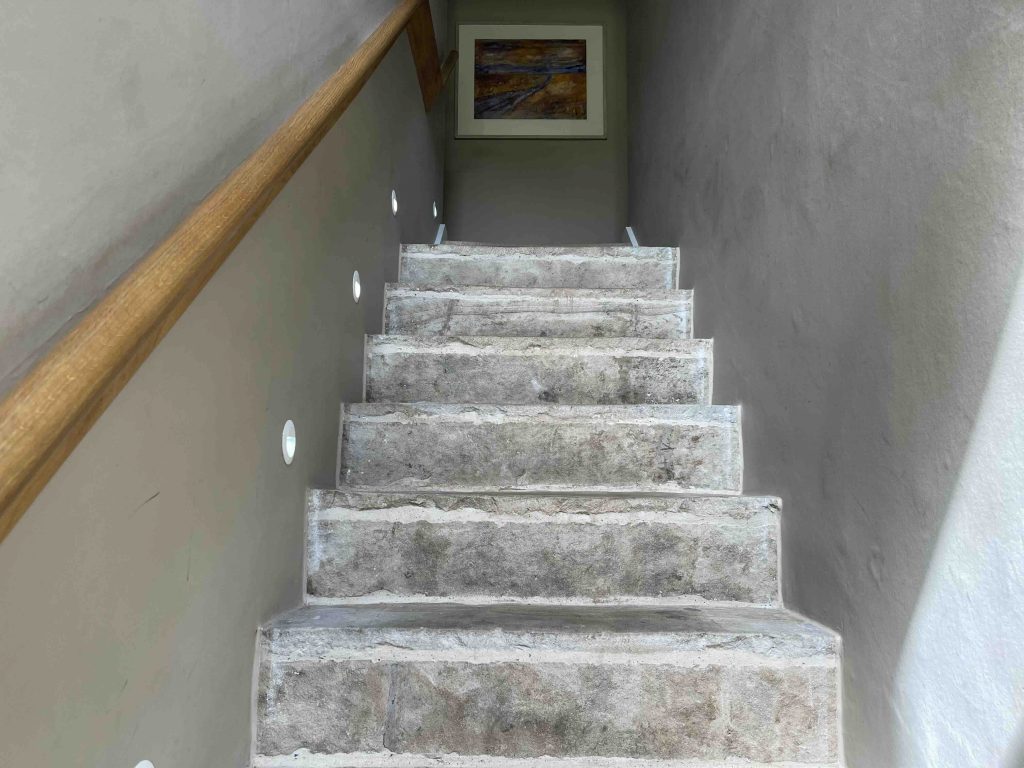
The first thing I touched was the exterior wall. Uneven and raw stone, cool under my palm, with a texture you’d never get from a smoothly rendered house. In the hallway, the intricately panelled walls add layers and depth captured by the soft natural light streaming through the doorway, the open fireplace in the lounge looks original, not just a hole cut into a chimney breast and fitted with a log burner, but the real thing, blackened and deep. You can smell the ash and age in the stone around it.
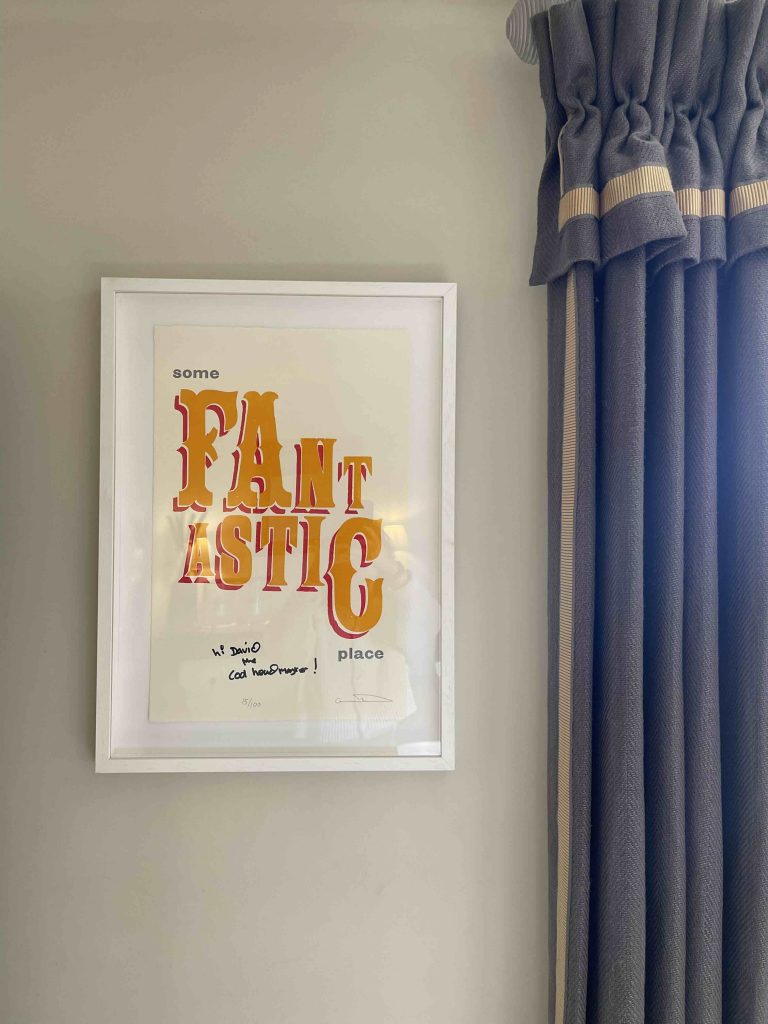
The bathrooms have roll-top baths with brass taps. The kitchen has an Aga set into what feels like the spine of the house, alongside marble worktops and a range cooker. The floors shift between natural stone, timber and jute as you move room to room. There’s intricately patterned wallpaper inspired by nature across some of the smaller rooms, antique furniture throughout, striking artwork and small things everywhere – bird statues, a hare on a side table – that feel like they were curated over years rather than in a single delivery from the same shop.
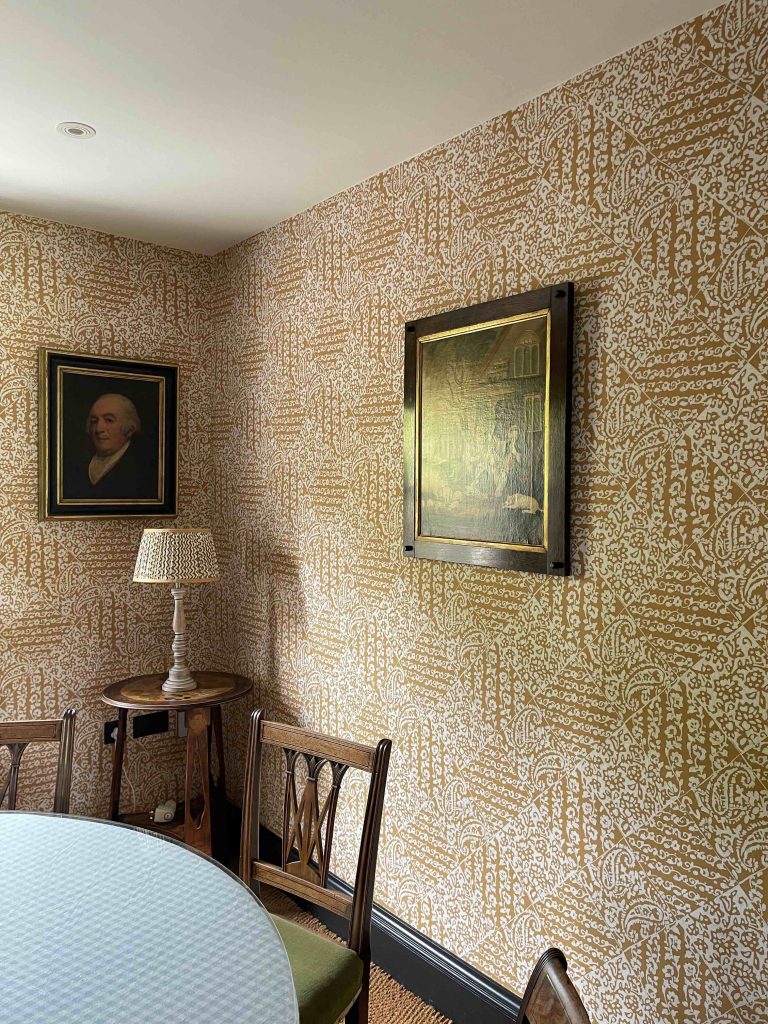
None of it is uniform. And that’s exactly why it works. When every surface has its own weight and grain, your body registers the space as real. You settle into it physically. Compare that with a room full of smooth, identical finishes – laminate, composite, machine-perfect plaster, and you might not be able to say what’s wrong, but something feels thin.
You don’t need a Georgian farmhouse to get this right. A limewashed wall instead of standard emulsion. Solid timber shelves instead of MDF. Linen that actually drapes instead of holding itself rigid. These are small material decisions, but your hands know the difference even when your eyes don’t.
Light That Knows What Time It Is
On the first morning I came downstairs early, before anyone else was up. The Georgian windows let in a soft, cool light that made the hallway feel almost blue. By the time we’d finished breakfast the kitchen was warm and bright, sun hitting the marble and bouncing off the Aga. And by evening, fire lit in the drawing room, table lamps on, candles along the dining table, the same walls that had looked cool at dawn were glowing amber.

Nobody changed anything. The space did it by itself, because it had been wired to allow it. Multiple circuits, different light sources at different heights, dimmers on everything that mattered. The room could be three or four different rooms depending on the hour.
Most homes I work on have one lighting state before we start: a pendant in the centre of the ceiling and a floor lamp in the corner. One mood, permanently. That’s not a taste problem, it’s a wiring problem, and the reason we always plan lighting early in a renovation, while the walls are open and before the electrician is already on site. Getting multiple circuits and dimmer switches into the right places is part of the build, not something you add afterwards. But once it’s done, you never think about the wiring. You just notice that the room feels completely different at nine in the evening than it did at nine in the morning.
Room to Do Nothing
16 people stayed at Telfit that weekend. Ten bedrooms, nine bathrooms, a drawing room, a TV room with a wood burner, a kitchen that seats fourteen with a separate dining space for eight more. On paper, it should have felt like a hotel. In practice, it felt like a home, a generous one, but a home.
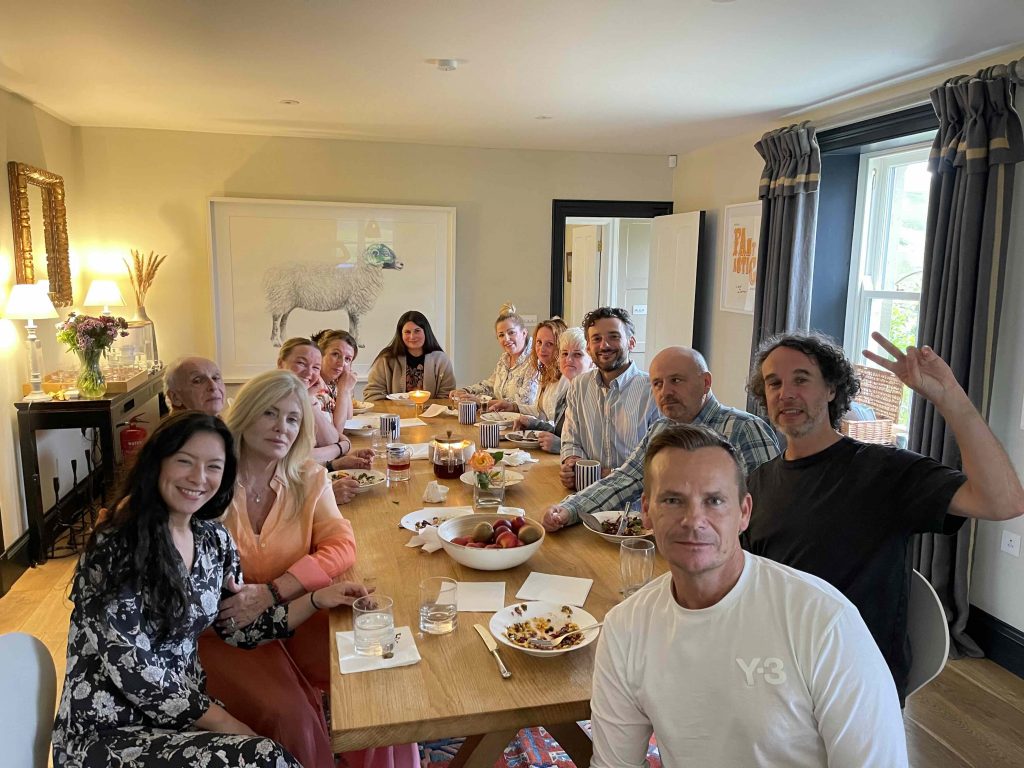
The reason was space that hadn’t been filled. The conservatory at the end of the kitchen looks straight out into the glacial bowl, and someone had resisted the urge to fill every cm with furniture in it. You could stand there with a coffee and just watch the light move across the moor. The hallway was wide enough to pause in. The dining table had room around it, you weren’t pressed up against the person beside you.
I see the opposite in most of the homes I start working on. Every square metre gets a job. Furniture pushed against walls. Shelves filled to capacity. Surfaces covered. It comes from a good instinct, people want their space to work hard; but the result is rooms that feel smaller than they are.
Retreat spaces feel restful partly because they have less in them. The gap between pieces, the clear surface, the room with nothing in it except good light and one comfortable chair – those aren’t wasted. They’re doing the most important work in the house.
Where the House Ends and the Land Begins
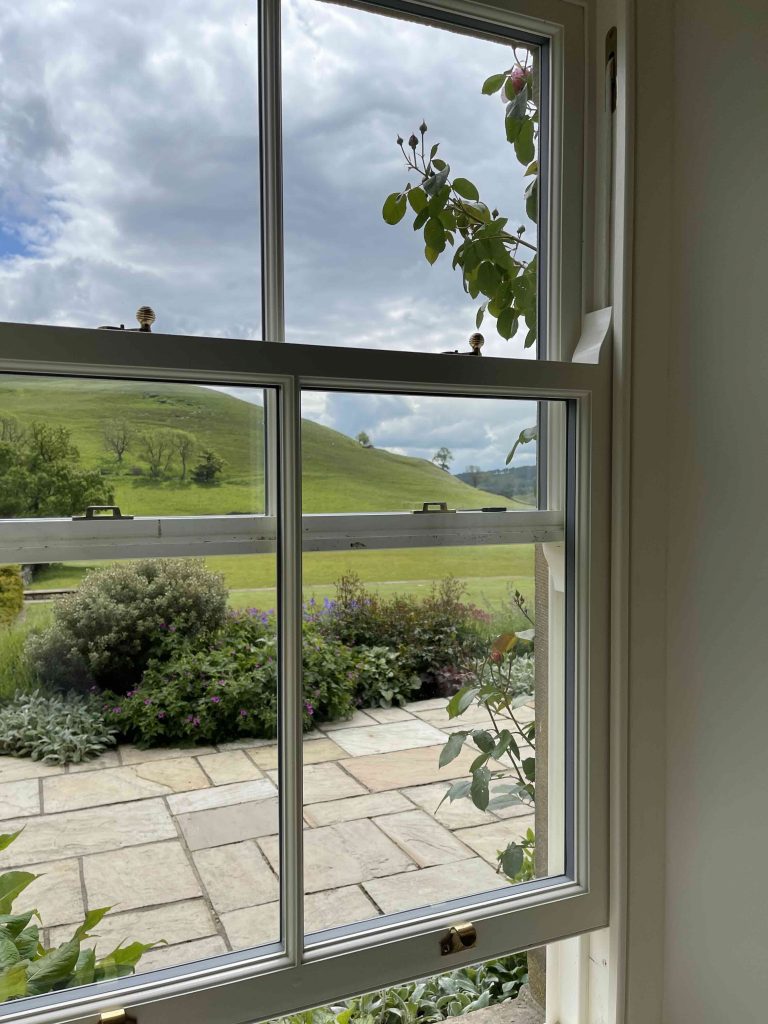
On the second morning I took my tea out through the French windows in the kitchen and stood on the terrace. Below me, the garden sloped down to the beck where people had been wild swimming the day before. Beyond that, moorland. No fence, no boundary wall, no point where the property announced itself as separate from the landscape.
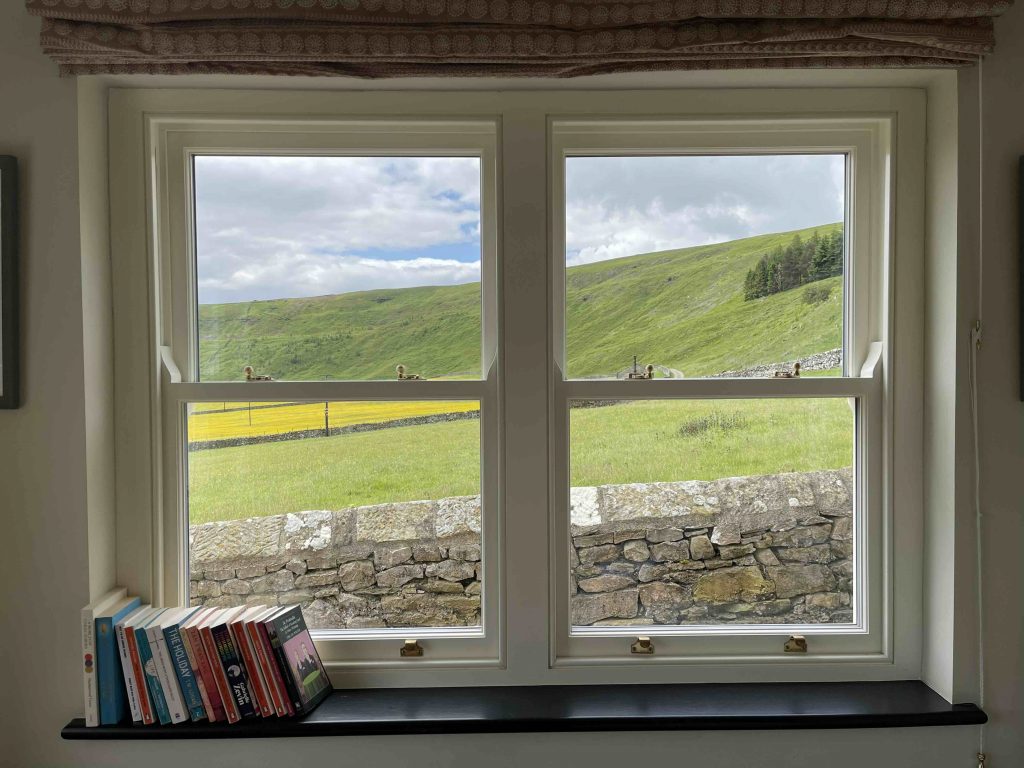
Inside, the conservatory framed that same view like a painting you could walk into. The stone and timber inside the house echoed the environment outside. The transition from kitchen to terrace to garden to moor felt continuous – one long breath, not a series of doors.
Most homes treat the garden as a separate project. Inside is the designer’s territory; outside is someone else’s problem. But the best residential spaces I’ve worked on treat the view from the window as part of the room. Even if your outdoor space is a small courtyard or a Juliet balcony, what you see through the glass matters. A pot with structural planting. A material that connects back to your interior palette. That continuity — inside and outside having the same conversation – is what makes a home feel whole.
What I Took Home
On the drive back to Manchester I kept thinking about what Telfit Farm had got right. It wasn’t the money; the Leathams had clearly invested, but the impact wasn’t necessarily achieved by how much money was spent. It was coherent. Every room connected to the next. The materials had been chosen to age, not just to photograph. And someone had left room for nothing to happen, for fire to crackle, for light to move across a wall, for a group of strangers to sit in comfortable silence after dinner because the space allowed it.
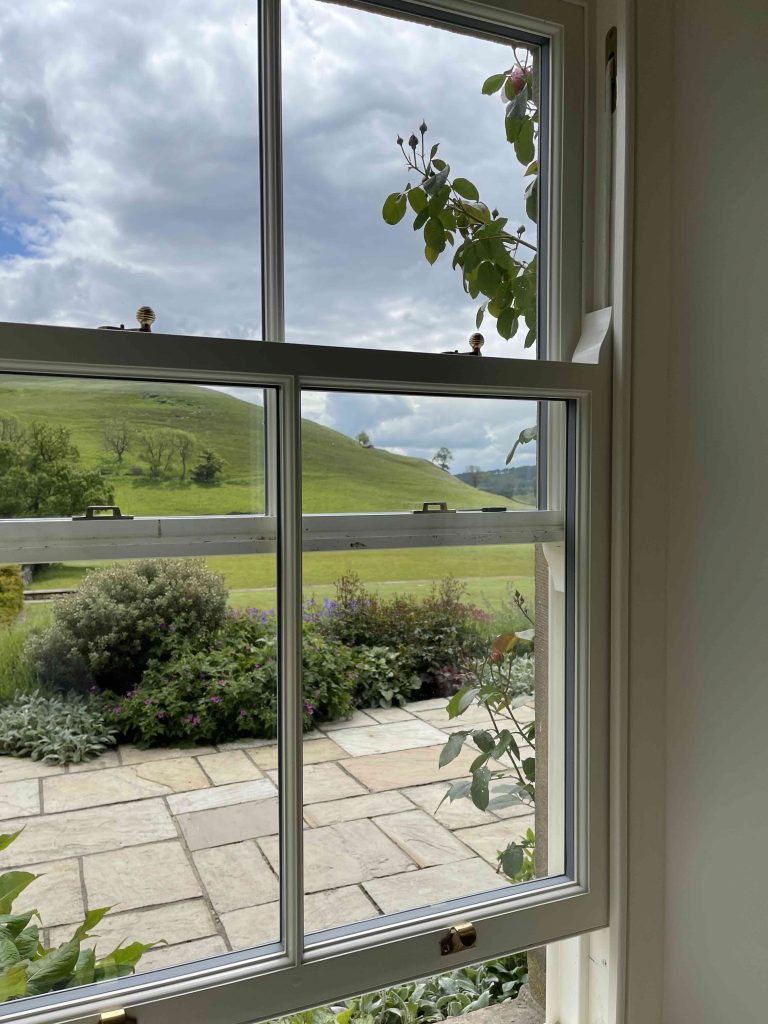
That’s what good design does. Not more. Just more intentionally. A restful home doesn’t need a spa bathroom or a meditation room. It needs materials with texture, light that moves, space to breathe, and a connection to whatever’s outside the window.
If you’ve ever walked into a room and felt something shift, your breathing slowed, your mind went quiet – that wasn’t the room being lucky. That was good design.
If you want to experience Telfit Farm or The Waterfall Chapel for yourself, Clark at Insider Retreats runs small group, 4 day wellness retreats in carefully chosen venues across the UK.
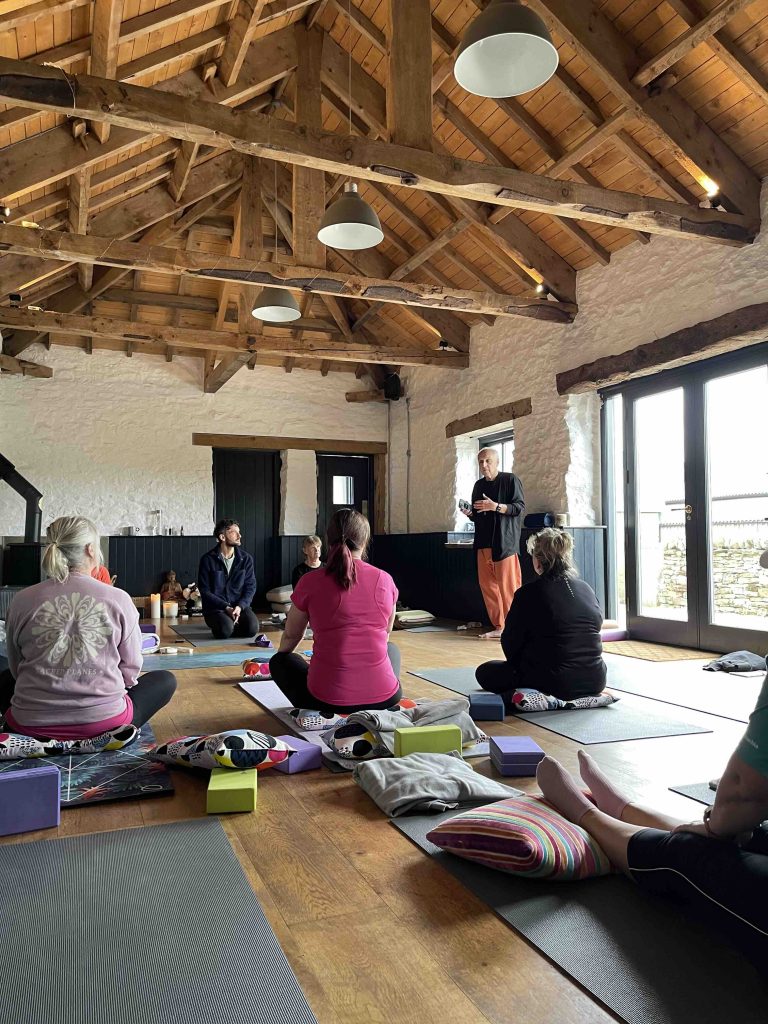
I can vouch for the food, the yoga, and the feeling of walking through that front door after three hours on the road.
And if you’re starting to think about how your own home could feel different, how a renovation could give you that same sense of arriving somewhere that works – our Renovation Strategy Session is where that conversation begins.
Natalie x